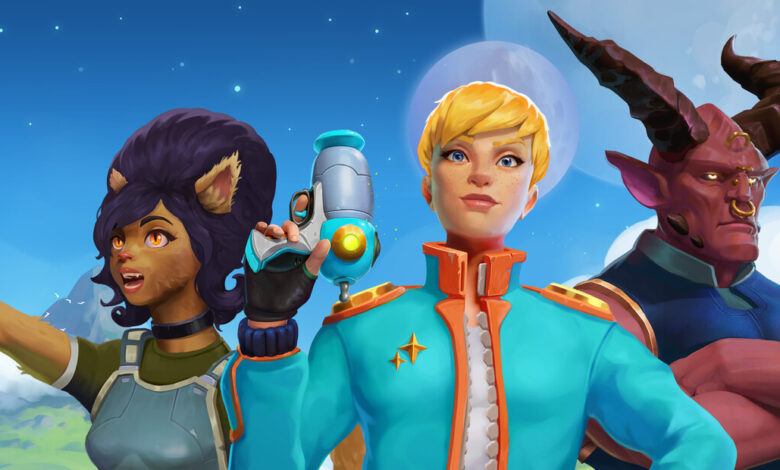
Stars Reach just launched into paid Steam Early Access on August 18, and its most compelling feature isn’t a boss fight or a loot table. It’s a guild of players who elected a mayor, zoned off a chunk of a planet, and built a functioning wildlife conservation program entirely on their own initiative. For entrepreneurs and gamers alike, that’s the real story: a game studio betting its future on letting players govern themselves, not just grind through content someone else designed.
Stars Reach comes from Playable Worlds, the studio founded by Raph Koster, the lead designer behind Ultima Online and creative director on Star Wars Galaxies. The pedigree matters. Koster has spent decades studying what makes online worlds feel alive, and Stars Reach is his attempt to rebuild the sandbox MMO for a generation raised on live-service grind loops.
How the GovBot Turns Players Into Politicians
At the center of Stars Reach’s social layer sits a system called the GovBot, a construct tied to the game’s Transplanetary League. When a group of players stakes a claim on a new planet, the GovBot gives them a sequence of tasks to establish a township. Citizens pool resources and a currency called Klaatu into the GovBot to level it up, unlocking new civic tools with each stage.
Once a township exists, citizens vote for a mayor. That role isn’t cosmetic. A sitting mayor can unlock zoning lots, place township kiosks, and set laws that apply to everyone living on the planet. Losing an election means losing real control over land use and civic rules, which gives politics inside Stars Reach actual stakes.
This is a governance system dressed up as a game mechanic, and it works because the incentives are real. Players aren’t role-playing a mayor for flavor text. They’re competing for a resource-backed office that shapes how an entire community operates.

The Conservationist Mayor Who Sold the Concept
The clearest proof of concept so far comes from a guild that used the GovBot system for something other than combat or trade. The group zoned off a section of a planet specifically to protect in-game wildlife, elected a mayor to run it, and sent trained “xenobiologists” out to locate Makers, the game’s wildlife spawn points, so they could claim and preserve the surrounding land.
No developer scripted that outcome. It emerged because the tools were flexible enough to support it, and because the social systems rewarded organizing a community around a shared goal. That’s the same dynamic any founder recognizes from building a company culture or an online community from scratch: give people real ownership and real stakes, and they’ll build things you never anticipated.
A Classless Economy Built for Every Playstyle
Underneath the politics, Stars Reach runs on a classless, open-ended progression system. Players can work as explorers, journalists, crafters, politicians, warriors, or conservationists, and nothing locks them into a single path. The game’s cloud-native tech lets players physically reshape terrain, reroute rivers, burn forests, and permanently alter ecosystems, which means the economy isn’t static. What players build and destroy actually changes the map other players interact with.
That combination of a persistent, player-editable world and a governance layer echoes the systems that made Star Wars Galaxies beloved despite its rough edges. It’s a very different pitch from the survival-sandbox loops of hits like Palworld, where the world mostly resets around you. Koster funded the project through a Kickstarter that closed in early 2025, raising far beyond its goal — evidence that a meaningful audience wants a sandbox MMO built around player agency rather than a fixed content pipeline.
- Classless progression across explorer, crafter, politician, warrior, and conservationist roles
- GovBot-driven townships with elected mayors, zoning, and enforceable local laws
- Terraformable planets where player actions permanently reshape the world
- A funded, community-backed launch rather than a publisher-driven live-service template
Why This Matters Beyond the Game
Stars Reach is still in Early Access, and Playable Worlds has said a free-to-play 1.0 launch is planned for next year. There’s real risk here. Self-governance systems can get messy, corrupt, or abandoned once the novelty fades, and Koster’s own history with Star Wars Galaxies shows how quickly a beloved sandbox can be reshaped by decisions players never asked for.
Still, the early signal is worth watching if you run any kind of online community or business. Stars Reach is a live experiment in what happens when you hand real authority to the people using your platform instead of dictating every rule from the top. A guild that organizes itself around wildlife conservation, without any developer telling it to, is a small case study in what happens when incentive design actually works. For founders building communities, marketplaces, or platforms of their own, that’s a lesson worth more than any patch note.
Related on BizzNerd