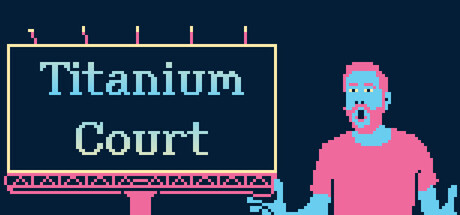
Titanium Court arrives as one of 2026’s most intriguing indie experiments, splicing the tile-flipping compulsion of match-three with the ladder-climbing chess of the autobattler genre. The result is clever, sometimes brilliant, and occasionally hilarious — yet it rarely translates its ingenuity into the kind of moment-to-moment pleasure that keeps players queueing up for one more run.
What Happened — A Genre Mash-Up With Real Ambition
Titanium Court drops players onto a neon-tinted arena where teams of miniature fighters are deployed across a grid that doubles as a match-three puzzle board. Pop three tiles of the same color and you fuel your roster; line up a cascading combo and you get to chain special abilities from a rotating cast of champions. It is a confident recipe on paper, and the opening hour delivers exactly the dopamine rush the premise promises.
The art direction leans into cheeky neon futurism, with sharp writing that gives each unit a personality well beyond the standard RPG archetypes. The tutorial cycles through a surprising number of mechanics, including field-wide modifiers, timed match bonuses, and a meta-progression tree that unlocks new fighters between runs. It is unmistakably a game built by a team with a point of view — and that alone sets it apart from a crowded roguelike shelf.
Industry Impact — The Market Finally Rewards Hybrid Design
The release lands at a moment when publishers are scrambling to re-ignite the autobattler boom that fizzled after its 2019 peak. Titanium Court’s decision to fold in match-three DNA is not just a stylistic flourish; it is a business bet that casual-friendly puzzle loops can drag a traditionally hardcore genre back onto phones, Steam Decks, and living-room screens. The mobile success of hybrid puzzle-strategy titles has already proven that audiences will pay — and keep paying — when the snack-sized combat loop feels good.
That bet matters for the wider gaming industry too. If Titanium Court’s commercial performance holds, expect a rush of genre splicing from mid-tier studios hunting for differentiated hooks without a triple-A budget. It also puts pressure on engagement-first design teams who have been chasing live-service retention to remember that the first twenty minutes must actually be enjoyable. Titanium Court’s weakness isn’t a lack of depth — it’s the long tail after that first rush.

The Bigger Picture — Clever Isn’t Always Fun, and That’s the Lesson
The most telling takeaway from Titanium Court is one that applies well beyond roguelikes: cleverness and enjoyment are not the same variable. Sharp writing, inventive systems, and surprising interactions can absolutely set a game apart in the storefront, but retention comes from feel — the tactile snap of a good combat trade, the rhythm of a risk-reward decision that pays off. Titanium Court has the IQ but sometimes misses the pulse.
That distinction matters for anyone building interactive products, not just indie studios. Entrepreneurs watching this release should note the pattern: a dense feature list and a charming pitch will win you coverage, but only the feedback loop keeps customers coming back. For Titanium Court, the fix isn’t a new system — it’s tightening the existing ones until each match feels inevitable rather than academic.
The Takeaway
Titanium Court is easy to admire and harder to love, a reminder that great ideas still need great pacing. If the studio refines its combat feel in a post-launch patch or sequel, the foundation is there for a genre-defining hit — and we’ll be watching closely to see whether cleverness learns how to throw a proper punch.
Related on BizzNerd
- Warhammer 40,000: Mechanicus 2 Review: The Machine God Returns
- Cave Story+ Review: One Dev’s Masterpiece Gets an HD Upgrade
- Midnight Fight Express Game Review
Titanium Court