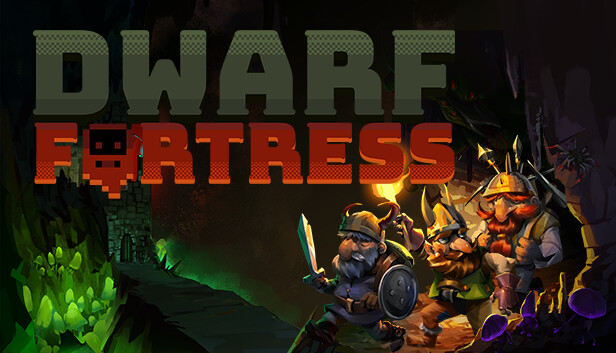
For most of Dwarf Fortress‘s long life, Tarn Adams had no idea how influential it had become. The co-creator recently looked back on his first real games convention, where he discovered that a huge share of the developers around him already knew — and revered — the freeware colony sim he and his brother had been quietly building since 2006. His reaction was pure disbelief, and it says a lot about how influence actually works in games.
“I Didn’t Know That Anyone Knew What We Were Doing”
The story goes like this: at an indie mega-booth, Adams found that roughly 90% of the 50 to 60 games showing alongside him had heard of Dwarf Fortress, and their creators reacted with something close to awe when he introduced himself. Until that point, he had barely met another developer at all. “I didn’t know that anyone knew what we were doing,” he said. Then, with characteristic candor: “I try to have good moral qualities, but I am apparently subject to all forms of flattery and vanity and such.” It is a rare, honest admission from a developer who spent more than a decade with almost no direct feedback from peers.
The Game That Quietly Shaped a Genre
That awe was earned. Dwarf Fortress‘s staggering simulation depth — geology, fluid dynamics, emergent personalities, generational histories — became a north star for a generation of designers. Its DNA runs through the modern colony-sim wave and inspired some of the biggest names in the medium. For 16 years the game was free, sustained by donations, until a 2022 premium Steam release added tile graphics and a friendlier interface and finally rewarded the brothers financially. Its influence, in other words, arrived more than a decade before its paycheck did — a pattern colony-sim fans will recognize from why games like this are so hard to build.
What Founders Can Learn From Bay 12 Games
There is a genuine business lesson buried in the anecdote. Adams and his brother built something uncompromising and patient, monetized it entirely on their own terms, and let word of mouth do the marketing for them. They never chased trends or diluted the vision to court a wider audience faster. The result is a product with a cult that turned into a genre, and a studio that answers to no publisher. In an industry obsessed with launch-day spikes, Bay 12 Games is a reminder that depth and distinctiveness can compound quietly for years before the world catches up.
Related on BizzNerd
- Why Colony Sims Like Dwarf Fortress Are So Hard to Build
- Valorborn and the Ambition of Tiny Teams
- Dodo Duckie: The 2D/3D Puzzle Platformer to Watch
Adams may be surprised he is famous, but the developers who grew up on his game are not. Sometimes the most important work is the kind that spreads quietly, one obsessed player at a time.