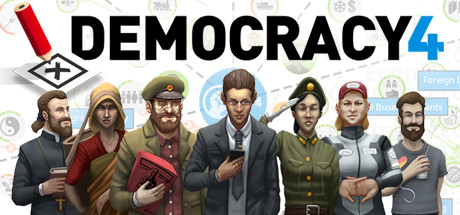
Democracy 4 has a habit of handing players the same uncomfortable verdict. Optimize hard enough for a stable, re-electable government, and the political simulation keeps pushing you toward radical, redistribute-everything policy — what fans jokingly call “ultra-mega-communism.” It’s a funny outcome with a serious lesson underneath, and it’s worth understanding whether you care about gaming, systems design, or the messy business of running a country.
How Democracy 4 Turns Governing Into a Spreadsheet
In Democracy 4, made by indie studio Positech Games, you play the head of state. You set policies and laws, adjust taxes, fund services, and try to keep enough voter groups happy to win the next election. Every decision ripples outward across a web of connected variables.
The game models the electorate as overlapping groups — capitalists, socialists, the poor, the wealthy, motorists, parents — each with their own priorities. Raise fuel taxes and you please environmentalists while enraging drivers. The simulation is detailed enough that UK newspapers have used it to stress-test real party manifestos.
Why the Sim Rewards Going Hard Left
Here’s where the “ultra-communism” joke comes from. The most reliable path to a contented, re-electable population often runs straight through aggressive redistribution.
Nationalize the railways, energy companies, and water. Cap CEO pay. Ban second-home ownership. Layer on a universal basic income funded by steep taxes on the wealthy. In the model, this floods the largest, poorest voter blocs with happiness while the smaller group of high earners simply can’t outvote them. The numbers favor the many over the few.

It’s a rational response to the game’s incentives — not a political manifesto, but the output of a system that rewards keeping the biggest voting groups satisfied.
What a Video Game Can and Can’t Teach Real Policy
The temptation is to treat this as proof of something. It isn’t. Democracy 4 is a model, and every model is a simplification. It captures voter sentiment and policy tradeoffs well, but it can’t fully price in capital flight, collapsing productivity, black markets, or the long tail of unintended consequences that real economies produce.
What it does teach is genuinely useful: governing is a system of tradeoffs, not a slogan. Every lever you pull helps one group and hurts another. That intuition — thinking in second-order effects rather than headlines — is exactly the kind of systems literacy that serves entrepreneurs and decision-makers well.
The Bottom Line
Democracy 4 keeps “solving” politics with sweeping left-wing policy because that’s what its rules reward, not because it’s handing down real-world truth. The value isn’t the punchline — it’s the way the game forces you to see governing as an interconnected machine. Play it long enough and you stop arguing about policies in isolation and start thinking about the whole system. That’s a lesson worth more than the meme.