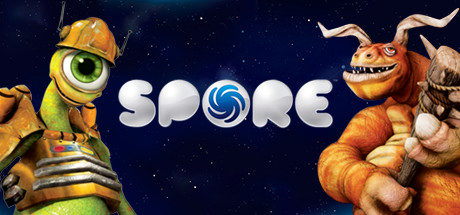
Former developers of Spore have gone on record admitting something the gaming community suspected for years: the previews they showed before the game launched in 2008 were more ambitious than anything they were actually building. Alex Hutchinson, lead gameplay designer on the project, put it plainly — those early demos “built a fantasy in people’s minds that was unachievable.” Will Wright, the game’s creator, has acknowledged they were “definitely overrepresenting” what Spore would eventually become. Nearly two decades later, this retrospective lands harder than ever, because the same pattern is still repeating itself across the industry.
If you build products, run a startup, or follow game development closely, this story is worth your full attention. It is not just a gaming trivia moment. It is a textbook case study in what happens when a demo outpaces your actual roadmap.
What the Demos Promised and What Players Actually Received
When Will Wright unveiled Spore at the Game Developers Conference in 2005 in a talk called “The Future of Content,” audiences saw something that looked genuinely revolutionary. The pitch was staggering: a single game that would simulate the entire arc of life — from a microscopic single-celled organism all the way to a space-faring civilization. The visual style in those early demos was grittier, the implied depth was vast, and features like a full aquatic stage — where players would evolve and compete underwater before ever setting foot on land — were prominently shown.
None of that made it into the shipped product.
The aquatic stage was cut. Complex mating and egg-protection mechanics that were demonstrated in 2006 never appeared. The art style shifted toward something far more cartoonish to reach a broader audience. What launched in September 2008 was, by the team’s own admission, closer to a collection of sci-fi minigames connected by an impressive creature creator than the sweeping life simulation the demos suggested. Notably, Will Wright had actually told people from the beginning that the game would be a series of distinct minigame phases — it is just that nobody was listening to that qualifier when the big vision was being sold.

EA gave Maxis a long creative leash and a development cycle that stretched to nine years. The gap between promise and product was not caused by a publisher rushing the studio out the door. The team built a vision they could not fully execute, showed it publicly before the constraints were understood, and let audience imagination fill in every gap with something even bigger than what was planned.
The Business Lesson Every Founder and Dev Team Needs to Hear
This is where the story stops being purely a gaming retrospective and starts being directly relevant to anyone building and selling a product.
A compelling demo is one of the most powerful tools in any founder or developer’s arsenal. It creates buzz, attracts investment, and builds an early audience. But a demo that outpaces your actual build does something dangerous: it hands your audience a mental model of your product that you may never be able to match. Once that image is locked in, every deviation from it reads as failure — even when the shipped product is genuinely good on its own terms.
Spore sold over six million copies in its first year. By commercial measures, it was a success. But the discourse around its launch was dominated by disappointment, and that disappointment was almost entirely manufactured by the gap between what was shown and what arrived. The game was judged against a product that was never real. That is a brutal position to ship into, and it was entirely preventable.
The lesson is not to avoid ambition in demos. It is to be precise about what you are committing to versus what you are exploring. Show your vision, but draw a clear line between “here is the direction we are heading” and “here is exactly what you will get.” Audiences and customers are forgiving about scope changes when they are brought along honestly. They are far less forgiving when they feel they were sold one thing and handed another.
Why This Pattern Keeps Happening and What It Costs the Industry
Spore is a well-documented case, but it is far from the only one. The gaming industry has produced a steady stream of launches where demo footage, pre-release trailers, and developer interviews painted a picture that the final game could not match. The incentive structure is partly to blame: studios need to generate excitement early to secure funding, press coverage, and pre-orders, and a cautious, tempered pitch rarely goes viral the way an audacious one does.
The cost compounds over time. Audiences grow more skeptical. Gaming communities have developed a near-reflexive cynicism toward big reveals, and that cynicism now extends to genuinely innovative products that get measured against a backdrop of broken promises. A studio that over-promises once can find its next announcement met with doubt even when the new game is fully deliverable.
For developers and studio heads, the Spore retrospective is a useful calibration point. Ask whether the demo you are building represents what you can ship or what you are hoping to ship. Ask whether the features you are showing publicly have passed the point of no return in development or are still aspirational. And ask what happens to your audience relationship if those aspirational features get cut under deadline pressure.
The team behind Spore had the talent, the budget, and the time. What they did not have was a firewall between their exploratory vision and their public marketing. That absence is what turned a commercially successful game into one of the most talked-about examples of hype outrunning delivery in the history of the medium. The game’s servers are still running in 2026. The lesson it teaches about honest product communication is just as alive.