Christopher Nolan’s The Odyssey Review: A Visually Magnificent Epic Undone by Its Cast

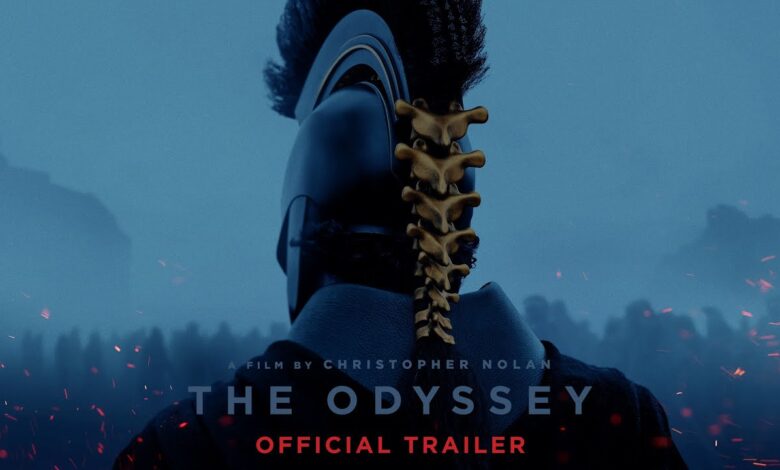
Warning: This review contains spoilers.
I wanted to love Christopher Nolan’s The Odyssey. Nolan is one of my favourite directors, and there are very few filmmakers left who can turn a cinema release into a genuine global event. The Dark Knight, The Prestige, Inception, Interstellar and Oppenheimer all show what happens when ambitious ideas, technical innovation and unforgettable performances end up in the same film.
That is exactly why The Odyssey is such a frustrating experience.
This is not an incompetent film. It is not visually ordinary, technically lazy or creatively safe, and Nolan’s adaptation of Homer’s ancient epic is full of breathtaking landscapes, powerful sound design, brutal battle sequences and moments of genuine cinematic scale. But I still did not particularly like it. The craftsmanship is visible in practically every frame, yet the emotional connection is missing — Nolan has built the physical shape of an epic without consistently delivering its soul.
Most critics strongly disagree with me. As of July 19, 2026, The Odyssey holds a 95% critics’ score and a 97% verified audience score on Rotten Tomatoes, while Metacritic reports an 89 Metascore — although its user score is a far more divided 5.0 out of 10. That gap reflects my own reaction. I can recognise the achievement without accepting that it is a masterpiece.

For me, the movie contains too many creative misses, and the largest of them is the casting.
Nolan Still Knows How to Create a Cinematic Event
Before getting into what went wrong, it is only fair to acknowledge what works — and visually, The Odyssey is frequently fantastic.
The islands, coastlines, cliffs, caves and endless stretches of sea are photographed with enormous confidence. Nolan understands that the environment cannot simply function as a backdrop here. The sea has to feel like an unpredictable force separating Odysseus from his kingdom, his family and his former identity, and it does. The landscapes often communicate more than the dialogue.
There are moments when the scale becomes genuinely overwhelming. Ships look fragile against open water, men seem insignificant beneath cliffs and storms, and the natural world feels ancient, hostile and completely indifferent to whether Odysseus survives. That side of the movie works beautifully.
Nolan also succeeds in creating the feeling of a story being told rather than simply displayed. The narration, abrupt breaks, voices and transitions occasionally produce an atmosphere closer to ancient theatre or oral storytelling than to a modern blockbuster, and at its best the film feels like a legend being spoken across generations.
I enjoyed the rhythm Nolan was reaching for, too. The movie refuses to rush through every destination like a conventional action film. It wants you to feel the exhaustion, the repetition and the psychological weight of a journey that appears to have no end. The intention is clear and often admirable — the execution is less consistent.
The Pace Works — Until It Does Not
I appreciate deliberate filmmaking, and I do not need every historical epic to move at the speed of a superhero movie. The slower passages give the landscapes and the mythology space to breathe, and Nolan clearly wants the audience to understand that returning home is not just a geographical problem for Odysseus. It is a slow struggle to hold on to his identity after war, loss, temptation and years of uncertainty.
Eventually, though, the pacing becomes uneven. Some conversations run well past their dramatic purpose while several of Odysseus’s most famous adventures feel strangely compressed, and the film spends a lot of time preparing us for emotional moments that never completely arrive. There are scenes that could have been cut without losing anything, sitting right next to parts of the journey that should have felt dangerous and unforgettable but pass in minutes.
Nolan is clearly building the whole movie around the final return to Ithaca. I understand that decision, but the journey cannot exist only to serve the ending — every encounter should change Odysseus and deepen our understanding of the man coming home. Instead, some episodes feel like spectacular stops on an expensive cinematic itinerary. We see that Odysseus has travelled far. We do not always feel what the journey has taken from him.
The Cyclops Sequence Is Almost Perfect
The encounter with Polyphemus is one of the strongest sections of the movie. The cave is dark, oppressive and genuinely frightening, and Nolan uses confinement brilliantly, building tension out of space, sound and uncertainty. For a while the film stops feeling like a celebrity-filled Hollywood production and starts feeling like a primal myth.
The sequence also captures the qualities that should define Odysseus: intelligence, deception, courage and dangerous pride. He does not survive through strength alone — he studies the situation, manipulates his enemy and uses language as a weapon. That is the Odysseus I wanted to see for the entire film.
Unfortunately, the design of the Cyclops itself is a letdown. Polyphemus never has the grotesque, unnatural presence such an iconic creature demands. His face looks designed rather than discovered, and the visual effects never quite match the physical atmosphere Nolan creates inside the cave. The surrounding scene is convincing; the creature at its centre is not. It is one of several moments where Nolan’s practical filmmaking builds something powerful, only for a digital element to weaken it.
The Film’s Biggest Problem Is Its Cast
The cast of The Odyssey is filled with talented actors. That does not mean they are right for these roles.
This is the central problem with the movie. Nolan appears to have assembled a list of major contemporary stars without always asking whether each of them could disappear into the ancient world he was building, and too frequently I stayed aware of the celebrity instead of the character.
I did not see Odysseus — I saw Matt Damon. I did not see Telemachus — I saw Tom Holland. I did not see Athena — I saw Zendaya. That distance between actor and character kept breaking my immersion.
The official ensemble includes Matt Damon as Odysseus, Anne Hathaway as Penelope, Tom Holland as Telemachus, Zendaya as Athena, Robert Pattinson as Antinous, Charlize Theron as Calypso, Samantha Morton as Circe, John Leguizamo as Eumaeus, Jon Bernthal as Menelaus and Elliot Page as Sinon. I like nearly all of these actors. The problem is not talent — it is credibility, chemistry, physical presence and whether they feel like they belong to the same mythological world. Too many of them do not.
Matt Damon Is Good, but He Is Not a Great Odysseus
Matt Damon clearly committed himself to this role. The physical preparation is visible — he looks weathered, capable and believable as a man who has spent years fighting, travelling and surviving — and he handles the tactical and physical side of the part professionally.
But Odysseus needs more than competence. He is a king, warrior, husband, father, strategist, liar, survivor and deeply flawed hero, brilliant and arrogant, tender and cruel, loyal and unfaithful, carrying the psychological damage of war while remaining dangerous enough to reclaim a kingdom. That contradiction demands extraordinary emotional depth, and while Damon communicates intelligence and exhaustion, I rarely felt the internal storm underneath. The performance is technically accurate without ever becoming emotionally unforgettable.
There were moments when I could not stop seeing Will Hunting wearing ancient Greek armour. That may sound unfair, because Damon is far more versatile than one role, but the familiarity of his screen persona works against him here. Odysseus should feel larger than life while remaining painfully human. Damon gives us the human part; he rarely becomes legendary.
I kept thinking about actors Nolan has directed before. Christian Bale could have brought a darker, more unpredictable intensity, and Matthew McConaughey proved in Interstellar that he can carry enormous emotional pain while staying physically convincing as a leading man. Either might have given the role more danger, desperation and gravity. Damon is not bad — he is simply not the Odysseus this movie required.
Penelope and Telemachus Feel Like a Modern Family Drama
The relationship between Penelope and Telemachus should be the emotional foundation of The Odyssey, because the journey only matters if we believe in the family waiting at the end of it. Unfortunately, Anne Hathaway and Tom Holland never convinced me as mother and son.
Their scenes feel strangely hollow. I never sensed the accumulated grief, uncertainty and pressure of a royal family that has survived roughly twenty years without its king. Penelope should be holding a kingdom together while resisting the men trying to replace her husband; Telemachus should be a young prince forced into adulthood in the shadow of a father he barely remembers. That relationship should be full of love, frustration, resentment, fear and desperation. Instead, several scenes play like a contemporary teenage family drama.
Holland is talented, but his energy, expressions and unmistakably modern screen personality make it hard to accept him as an ancient prince slowly growing into authority. Hathaway carries more dramatic weight, yet the chemistry between them never clicks. And because their scenes matter so much to the structure, the weakness bleeds into everything else. The eventual return to Ithaca should land with overwhelming emotional force. It does not. Nolan builds toward the reunion as though it will destroy the audience, but the relationships have not been developed strongly enough to earn it.
Zendaya Does Not Have the Required Gravitas as Athena
Zendaya’s casting as Athena does not work for me — and this has nothing to do with her race.
Athena is the daughter of Zeus, the goddess of wisdom and strategic warfare. She should radiate authority, intelligence and divine distance, and when she enters a scene, mortals should seem smaller around her. Zendaya is talented and charismatic, but she feels too youthful and too contemporary for this interpretation. I never felt I was watching an ancient goddess who understands human conflict from a perspective mortals cannot reach; I felt I was watching a major modern celebrity performing a mythological supporting role.
Athena does not need to shout or physically dominate anyone. Her power should come from control, certainty and the quiet suggestion that she already knows how everything ends. That authority is missing here, and a more mature performer — or simply one capable of projecting greater severity and timelessness — would have strengthened every scene involving the gods. The problem is presence, not ethnicity.
Robert Pattinson Is Entertaining but Not Dangerous Enough
Robert Pattinson is one of the more enjoyable performers in the movie. As Antinous he brings instability, arrogance and a genuinely unpleasant energy to the Ithaca storyline, and he knows how to make the smallest gesture feel uncomfortable. He is never boring.
Still, I expected Antinous to feel more dangerous. He should be an infection inside Odysseus’s home — a man so confident in the king’s absence that he already behaves as if Ithaca belongs to him. Pattinson delivers the entitlement and the cruelty, but not enough political or physical menace. He is interesting rather than terrifying. It remains one of the stronger casting choices, but another actor might have made the threat feel more immediate.
Agamemnon Works Better Than Menelaus
The scenes involving Agamemnon are brutal and visually effective. Even when the character is not shown clearly, there is a physical credibility to him — he looks like he belongs to a world of war, kings and Greek mythology, and those sequences briefly give the film the heavier atmosphere it otherwise lacks.
Jon Bernthal as Menelaus is less convincing. Bernthal is a strong actor with real screen intensity, and he has been excellent in roles built on modern violence and emotional volatility, but I never fully accepted him as the king of Sparta. The performance feels like Jon Bernthal placed inside a historical production rather than a character emerging naturally from it. Again, that is not an attack on his ability — it is a question of fit.
Charlize Theron Is the Best Casting Decision
Charlize Theron as Calypso is easily one of the film’s strongest choices. Calypso has to embody beauty, comfort, temptation, affection and imprisonment all at once — she offers Odysseus an escape from suffering that would cost him his home, his family and his human identity — and Theron has exactly the maturity, beauty and screen authority the character demands.
She can seem compassionate and dangerous in the same breath, and she is entirely believable as someone who could persuade an exhausted traveller to stay on her island and forget the world outside it. Her scenes carry the mythological presence several other sections lack, and even when the writing slows down, Theron herself stays compelling. Honestly, I would probably eat the lotus flower and stay on that island too.
Circe Is Another Missed Opportunity
Samantha Morton plays Circe, the witch-goddess who transforms Odysseus’s men and becomes his lover in Homer’s poem. Morton is a respected performer, but this version of Circe never has enough mystery, danger or seductive power. The encounter should feel transformative — Odysseus is walking into the territory of someone who can change the physical nature of the men around her — yet the sequence feels oddly restrained.
The adaptation also drastically reduces the time Odysseus spends with her. In Homer’s poem he stays for a year; the film moves him along far more quickly, and Calypso is similarly softened and romanticised compared with the original story. Those changes are not automatically wrong, but they strip away some of the moral and emotional complexity of the journey.
John Leguizamo Needed More Age and Weight
John Leguizamo is a good actor, and parts of his Eumaeus work, but I do not think he was the right choice. Eumaeus is defined by endurance and loyalty — a man who stayed faithful to Odysseus while the kingdom crumbled and a new generation grew up without its king. The role needs someone who looks deeply weathered by time.
Leguizamo performs the material well enough, but he never projects the age, patience and accumulated wisdom I imagined. An older performer with a heavier physical and emotional presence could have made Eumaeus feel like a living link between the old Ithaca and the kingdom Odysseus finally returns to. It is another case of a good actor who does not fully fit the role.
Elliot Page Never Convinces as Sinon
Elliot Page plays Sinon, the Greek soldier tied to the Trojan Horse strategy — and my criticism of this casting has nothing to do with Page being transgender. Page simply does not convince me as a Greek warrior.
The role calls for military credibility, cunning and the confidence to walk into an enemy city and manipulate it during the final stage of a brutal war, and I never felt sufficient physical danger or warrior presence in the performance. Page’s recognisably contemporary screen identity makes it even harder to disappear into the period.
This is the same standard I apply to Holland, Zendaya, Damon and everyone else in the ensemble. The question is never whether an actor deserves to be in a major production — it is whether the actor makes us believe the character. In this case, I did not.
Diversity Is Not the Real Issue — Coherent World-Building Is
The ethnically diverse casting will inevitably become one of the most debated parts of this film, so let me be precise about my problem. It is not that people of different races appear in a mythological story. Ancient Mediterranean societies were connected through trade, migration, conquest and slavery, and The Odyssey is mythology, not documentary footage — filmmakers have enormous room for interpretation.
The real issue is visual and cultural coherence. The cast often feels assembled from modern celebrity culture rather than drawn from one believable cinematic civilisation. Nolan presents a deliberately contemporary, ethnically varied ensemble, but the screenplay and the world-building do not always integrate those choices into a unified vision — so the casting strategy itself becomes visible. Instead of disappearing into ancient Greece, I kept noticing the modern production decisions behind it. That is what damages the immersion.
A filmmaker can reinterpret mythology in practically any direction, but the world has to stay internally consistent. The audience needs to believe these characters share a history, a culture and a civilisation. Here, many members of the ensemble look like they belong to different movies.
Troy and 300 Created More Convincing Ancient Worlds
Neither Troy nor 300 is historically accurate. 300 is deliberately exaggerated, stylised and adapted from a graphic novel, while Troy rewrites major parts of Homeric mythology and compresses a decade-long war into something far simpler. Yet both films build internally coherent worlds.
Brad Pitt’s Achilles, Eric Bana’s Hector, Peter O’Toole’s Priam and Sean Bean’s Odysseus all feel physically and dramatically suited to the interpretation Troy created. The cast of 300 commits completely to its heightened visual language — the performances, bodies, costumes, dialogue and cinematography all belong to the same brutal fantasy. Those films understood that historical and mythological cinema lives or dies on screen presence: the performer has to look capable of existing inside the legendary world, even when that world is historically wrong.
Nolan’s production is technically more sophisticated and visually more naturalistic, but his cast rarely achieves the same unity. Prestige and celebrity cannot replace credibility.
Nolan’s Nonlinear Structure Is Faithful in Spirit but Uneven in Practice
One criticism of this film deserves pushback, so let me make it clearly: Homer’s Odyssey is not told in chronological order either. The poem begins in the middle of the story, and Odysseus’s earlier adventures — the Lotus-Eaters, the Cyclops, Circe — are recounted by Odysseus himself to the Phaeacians, with Books 9 to 12 forming one long embedded narrative covering the previous ten years. Nolan’s nonlinear approach makes sense and is faithful to the spirit of Homer.
The problem is not that the movie tells events out of order. The problem is that the reordering does not always create the emotional or dramatic momentum we expect from Nolan. In Memento, The Prestige and Oppenheimer, structure changes how we understand the characters — information arrives exactly when it can transform the meaning of what came before. In The Odyssey, the structure sometimes feels merely decorative. The fragments, narration and time shifts build atmosphere, but they do not consistently deepen the characters, and some sequences end up disconnected from the emotional journey. The structure is intelligent; the dramatic accumulation is weaker.
A Spectacular Production With Too Many Creative Misses
There is no question that The Odyssey should be seen on the biggest screen you can find. The scale, the landscapes, the sound and the physical filmmaking deserve it, and Nolan remains one of the few directors who can make a blockbuster feel handcrafted rather than assembled by committee.
But technical achievement cannot replace emotional conviction. The family relationships do not work. Too many cast members do not fit their roles. The screenplay races through some of the most interesting adventures while stretching scenes that add little emotional weight. The Cyclops sequence is brilliantly staged but undermined by its creature design; Circe lacks danger; Athena lacks authority; Telemachus feels too modern; and Odysseus never fully becomes the legendary king the story demands. The result is a movie I can admire frame by frame while disliking as a complete experience.
Final Verdict: Is The Odyssey Worth Watching?
Christopher Nolan’s The Odyssey is worth seeing for its cinematography, its landscapes, its sound design and its moments of enormous theatrical scale. It is not one of Nolan’s best films.
I understand what he was reaching for — a fusion of Homeric storytelling, ancient theatrical atmosphere, nonlinear structure and modern IMAX spectacle — and there are moments when all of it aligns and the film genuinely becomes epic. But those moments are surrounded by too many mistakes. The cast is full of talented performers who feel wrong for their characters, the emotional relationships cannot carry the weight placed on them, and the screenplay lacks the dramatic depth a story about war, family, identity and twenty years of suffering demands.
Nolan’s greatest films balance technical ambition with human emotion. Interstellar makes cosmic scale intensely personal. The Dark Knight matches every major character with an actor capable of defining the role. The Prestige turns rivalry into psychological destruction. Oppenheimer makes history feel like an immediate moral crisis. The Odyssey gives us the images of an epic without consistently giving us the emotional force of one.
I wanted to watch Odysseus fight desperately to return to Penelope and Telemachus. Too often, I watched Matt Damon trying to carry an ensemble that never became a believable family or civilisation. This is an ambitious, beautiful, technically exceptional film — and a major disappointment.
Final rating: 7/10
A magnificent-looking journey that never fully convinces us why returning home matters.
Frequently Asked Questions
Is Christopher Nolan’s The Odyssey a good movie?
It is technically impressive and visually exceptional, but its casting, uneven pacing and limited emotional depth prevent it from becoming a truly great film.
Is Matt Damon good as Odysseus?
Matt Damon gives a committed and physically convincing performance, but he lacks some of the emotional darkness, authority and mythological presence the character requires.
Is The Odyssey faithful to Homer?
The movie retains the central journey, major characters and nonlinear storytelling approach of Homer’s poem, but it alters, shortens or removes several relationships and episodes.
Who gives the best performance in The Odyssey?
Charlize Theron is one of the strongest casting choices as Calypso. Robert Pattinson is also entertaining as Antinous, although the character could have been more threatening.
Why is this review rated 7 out of 10?
The cinematography, natural scenery, narrative ambition and several major sequences are excellent. However, widespread miscasting, weak family chemistry, inconsistent pacing and limited emotional impact significantly weaken the complete film.
Related on BizzNerd
- The Dark Knight — Full Story and Review
- The Batman (2022) Sequel — Latest Information
- Minecraft Movie — Release Date + Everything We Know
- Everything We Know About the Upcoming Avatar Movies
The Odyssey (2026)