
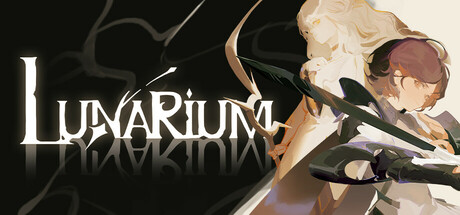
Every week the Steam new releases page swallows dozens of indie games whole, and every so often one of them deserves to claw its way back out. Lunarium is that game this week — a hand-drawn action RPG from a nine-person debut studio that plays less like a Dark Souls clone and more like a love letter to Sekiro. For anyone who follows the business of indie games as closely as the games themselves, it’s a textbook case of a tiny team punching well above its headcount.
Lunarium launches July 29 on PC via Steam for $17.99, and it has the kind of confident identity most first projects never find.
A Nine-Person Debut Bets Everything on Style
Lunarium comes from Lunarium Game Studio, a nine-person team based in Shanghai, with publishing handled by Imperfect Games. That’s a lean operation for a game this visually ambitious. The art is hand-drawn and isometric, wrapped in a melancholy atmosphere that invites obvious comparisons to Nier — all fading beauty and quiet dread. The story follows two sisters, Ave and Lune, who set out to save their dying homeland, with Ave swinging a sword on the front line while Lune backs her up with magic.
Launching in English, Japanese, and both Traditional and Simplified Chinese, the studio is clearly aiming at a global audience from day one — a smart move for a small team that needs every market it can reach. Fans of tightly made indies like Cave Story+ know how far a strong artistic voice can carry a modest budget.
Parry First, Ask Questions Later
What separates Lunarium from the crowded soulslike shelf is a deliberate design choice. Most games in the genre lean on the dodge roll and its invincibility frames, treating parries as a high-risk flourish. Lunarium flips that priority. Here the parry is the primary defensive tool, which pushes the combat much closer to Sekiro: Shadows Die Twice than to Dark Souls. Instead of rolling through hitboxes, you’re reading enemy animations and timing your deflections — a rhythm that rewards nerve over patience.
The dual-protagonist setup adds another layer. Coordinating Ave’s aggression with Lune’s magical support turns each encounter into a small puzzle, and it’s the sort of hook that separates a memorable soulslike from another entry in the pile. It’s the same “chase mastery, not just survival” philosophy that keeps players hooked on demanding hits like Wuchang: Fallen Feathers.
Standing Out in a Brutal Marketplace
The hardest part of shipping an indie game in 2026 isn’t making it — it’s being seen. Thousands of titles hit Steam every month, and discoverability is a genuine business problem. Lunarium’s answer is differentiation: a distinctive art style, a clear combat identity, and a price point that undercuts full-budget releases. For entrepreneurs watching the games space, it’s a reminder that a sharp, specific vision travels further than a broad, safe one.
Whether Lunarium becomes a breakout or a cult favorite, it’s proof that a small team with a strong point of view can still command attention against far bigger competition.
The Verdict So Far
Lunarium is exactly the kind of game worth slowing down for — striking to look at, sharp to play, and built by a team that clearly knew the game it wanted to make. If parry-heavy combat and moody hand-drawn worlds are your thing, this one earns a spot on your wishlist.