
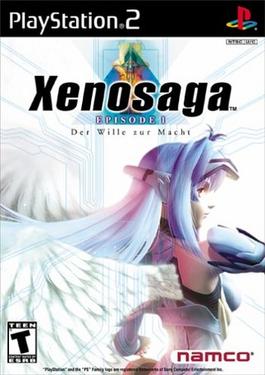
Xenosaga is on PC. That sentence alone would have sounded like a fever dream to fans of the cult classic RPG series a few years ago — and yet here we are. The catch is significant: what actually landed on PC is not the beloved PS2 trilogy that defined a generation of JRPG players. It is a port of a mobile game version that dates back to 2004, making it roughly two decades old before it ever saw a desktop.
For anyone tracking how publishers monetise dormant IP, this release is worth paying attention to — not because it delivers what fans asked for, but precisely because it does not.
A Two-Decade-Old Mobile Port Finally Reaches the Desktop
The original Xenosaga trilogy launched on PlayStation 2 between 2002 and 2006. It was ambitious, dense, and divisive — a cinematic sci-fi RPG that pushed the hardware and asked a lot of its audience. It never got a remaster, a remake, or a PC port. For years, fans hoping to replay the series were stuck with aging hardware or emulation.
What changed is not what most people hoped for. The PC version that arrived is based on a 2004 mobile adaptation — a compressed, simplified version built for the hardware constraints of phones that existed when flip phones were mainstream. It is not the full mainline experience. It is a historical artifact running on modern machines.
That distinction matters enormously. JRPG fans are not a passive audience. They track developer communications, debate canon, and hold publishers accountable for how legacy IP gets treated. Releasing a mobile port and calling it the series’ PC debut is the kind of move that generates headlines — but not all of them flattering.
Fan Reaction Is Split, and That Division Signals Something Bigger
Reactions to the Xenosaga PC release fall into two camps that rarely agree with each other.
One camp is genuinely glad the series exists on PC in any form. For players who have never touched the games, or who want a legal way to experience the IP without hunting down PS2 hardware, the port represents access. A foot in the door. Maybe a signal that Bandai Namco and Monolith Soft are warming up to the idea of the series living on a wider platform.
The other camp — louder, and arguably more invested — sees the mobile port as a missed opportunity dressed up as fan service. The argument is simple: if you have the IP, the goodwill, and the market demand, releasing a 20-year-old mobile game instead of a proper remaster or PC port of the original trilogy feels like a low-effort hedge. You get to say you brought Xenosaga to PC. You do not have to do the hard or expensive work of actually doing it right.
Both reactions are rational. And both are useful data points for anyone watching how publishers handle older franchises.
What This Tells Us About How Publishers Revive Dormant JRPG IP
Xenosaga is not an isolated case. Across the industry, publishers sitting on dormant JRPG catalogues are being forced to make decisions as PC gaming grows and retro nostalgia drives real revenue. The question they keep asking is how much investment the revival actually requires.
The low-effort path — a mobile port, a simple emulated release, a bare-minimum PC conversion — costs less and carries less risk. It satisfies a checkbox. It puts the title on Steam and lets the publisher point to the IP as active without committing to a full production budget.
The high-effort path — a genuine remaster with updated visuals, modern controls, and quality-of-life improvements — requires meaningful investment, a development team, and a bet that the audience will show up and spend money. That bet is not always wrong. The Final Fantasy pixel remaster series, Dragon Quest XI’s PC launch, and the Persona series’ belated arrival on PC all demonstrated that properly treated classic JRPGs have a real PC audience willing to pay.
Bandai Namco and Monolith Soft have one of the most distinctive RPG legacies in the industry between Xenosaga, Xenogears, and the Xenoblade Chronicles series. The PC debut of a 2004 mobile port does not close the door on a proper Xenosaga remaster — but it does not open it either. It suggests the publisher is testing demand at minimal cost before committing to anything larger.
If the PC release attracts enough attention, reviews, and player interest, that data becomes the business case for doing the job properly. If it lands quietly and disappears, the trilogy stays shelved. Either way, fans who want the real Xenosaga on PC are essentially funding a market research exercise right now.
That is the reality of reviving dormant IP in 2026. Publishers are not being purely cynical — they are being cautious. But for a fanbase that has waited two decades for a proper PC release, cautious looks a lot like disappointing.