
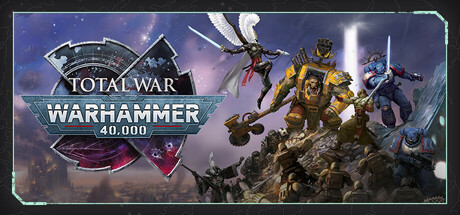
Creative Assembly has confirmed that Total War: Warhammer 40,000 will let commanders permanently rewrite the battlefield through destructible terrain — a first for the long-running Total War series. In a recent dev showcase, the team demonstrated how forests, walls, and structural cover can be obliterated mid-battle, with the change persisting for the rest of the engagement. For a strategy franchise built on careful positioning, this is a meaningful structural change to how battles will play out.
How Destructible Terrain Changes The Battle Loop
The headline feature is straightforward: terrain elements are no longer permanent. If a forest is in the wrong place, the right unit and the right ordnance can take it down. Cover walls collapse under sustained fire. Buildings can be reshaped or flattened by orbital weaponry, heavy artillery, or psychic assets befitting the 40K setting. Creative Assembly is leaning into the franchise’s tonal flexibility — Warhammer 40,000 has always been the maximalist spin on Games Workshop’s IP, and Total War: Warhammer 40,000 is borrowing that energy mechanically. The implications for matchmaking, faction balance, and engagement length are significant. A commander who shapes the terrain to suit their army gains an advantage that did not exist in previous Total War: Warhammer titles. Pyrrhic plays — destroying ground you might need later — become real strategic tradeoffs rather than cosmetic flourishes.
What This Means For Strategy Game Design In 2026
Destructible environments are not a new idea. Battlefield series players have lived with them for over a decade, and several real-time strategy titles have flirted with the concept. What is new is bringing systemic, persistent terrain destruction into a Total War-scale battle, where unit counts run into the hundreds and the simulation has to track every interaction. The technical bar is non-trivial, and Creative Assembly’s willingness to ship it suggests Total War: Warhammer 40,000 is meant to be a flagship release rather than a side project. From a design perspective, this also raises the ceiling on emergent moments — the kind of unscripted plays that drive social clips, streaming highlights, and word-of-mouth marketing for strategy games. In a year where the strategy genre is fighting for attention against live-service titans, that emergent ceiling matters more than ever.
Why This Bet Could Pay Off For Sega And Creative Assembly
Sega’s Creative Assembly studio has had a rocky few years — high-profile cancellations, layoffs, and a cooling relationship with parts of the Total War audience. A Warhammer 40,000 entry is the most commercially obvious move on the table. The franchise’s grimdark aesthetic, devoted tabletop community, and existing crossover with the fantasy Warhammer Total War audience give the project a clear path to scale. Layering in a genuinely new mechanical hook — destructible terrain at this scale — gives Creative Assembly something marketable beyond the IP itself. From a business standpoint, this is exactly the kind of feature that earns trailer screen time, sells preorders, and gives reviewers a clear thesis to anchor their coverage. If the implementation lands clean, Total War: Warhammer 40,000 could be the studio’s best-launching title in years.
Destructible terrain is the kind of feature that sounds simple in a press release but reshapes the entire feel of a strategy game. Creative Assembly is betting that the bigger, louder, more chaotic 40K setting is the right place to introduce it. If the systems hold up under the franchise’s signature scale, this could be a defining release for the genre.