
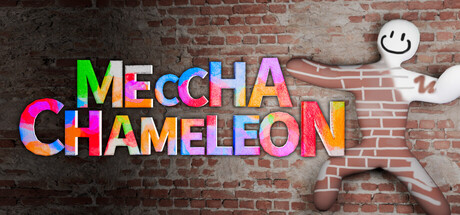
An indie hide-and-seek game where you paint your own body to blend into the scenery has become Steam’s latest overnight phenomenon. Meccha Chameleon sold its first million copies in just four days, and it has only accelerated from there — a runaway success that’s equal parts silly multiplayer fun and a masterclass in how a tiny team can take over the charts with zero marketing budget.
The Hide-and-Seek Game Everyone’s Painting Into
The concept is gloriously simple. Hiders smear paint across their characters to match the colors and textures of the environment, flattening themselves against walls, floors, and props to disappear in plain sight. A hunter then races the clock to spot them before time runs out. It’s the kind of easy-to-learn, hard-to-master party premise that thrives on chaos, laughter, and the occasional perfectly camouflaged hiding spot that leaves an entire lobby stumped.
From Zero to Millions in a Week
Released on June 10, 2026 for PC, Meccha Chameleon hit one million sales by June 14 and kept climbing fast, blowing past two and then three million within the following days. Remarkably, the game was built by a small Japanese indie team in roughly two months and launched with essentially no promotion — it spread entirely through word of mouth, streamers, and friend groups dragging each other in. The numbers were striking enough that a veteran producer at Sega publicly marveled at the achievement, calling sales of that scale without marketing almost unthinkable for the games industry.
The “Friendslop” Boom and What Founders Can Learn
Meccha Chameleon is the newest entry in a wave of cheap, chaotic multiplayer hits — affectionately dubbed “friendslop” — that have dominated Steam by being genuinely fun to play with friends. The business takeaway for any entrepreneur is hard to miss: a sharp, original hook, a low price, and built-in social virality can outperform a massive marketing spend. When your players become your distribution channel, growth compounds on its own. We’ve seen the same dynamic before with lean, high-value indies like Slay the Spire 2, which beat far bigger budgets on craft alone.
The Takeaway
Meccha Chameleon proves that in 2026, a brilliant idea and an internet full of friends can still turn a two-month passion project into a multimillion-selling smash. It’s a fun game first — but it’s also a reminder that virality, not budget, is the great equalizer in modern gaming.