
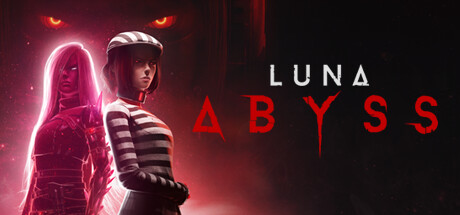
Steam just officially crowned “bullet heaven” a genre name — and then, almost immediately, a bullet hell FPS showed up and stole the spotlight. Luna Abyss launched on May 21, 2026, and within days it had become the most talked-about new release on the platform. For gamers, it delivered something genuinely rare: a first-person experience built around dodging beautifully patterned enemy fire rather than spraying it. For indie developers paying attention to what actually breaks through on Steam, the contrast with the current trend is worth studying closely.
Bullet Heaven vs. Bullet Hell: Why the Distinction Actually Matters Right Now
These two genre labels get mixed up constantly, and the confusion is understandable given how similar the names sound. Here is the clean breakdown: in a bullet hell game, you are the prey. Enemies flood the screen with dense, choreographed patterns of projectiles, and your job is to survive by reading the patterns and threading through them with surgical movement. Classic arcade shooters and modern hits like Returnal live in this space.
Bullet heaven flips that relationship entirely. You become the one flooding the screen. Enemies swarm in endless waves while your character automatically fires and you focus on picking upgrades between rounds. Vampire Survivors popularized this loop in 2022, and the genre exploded from there. In May 2026, Valve made it official — “bullet heaven” is now a recognized Steam genre tag, backed by a public player poll and a reported push from hundreds of developers to get it canonized.
With that backing, bullet heaven games were having their moment. Which makes Luna Abyss landing as the week’s standout release all the more interesting.
What Luna Abyss Actually Does Differently in First-Person
Developer Kwalee Labs — formerly known as Bonsai Collective — spent seven years building Luna Abyss. The studio drew inspiration from Nier: Automata, Metroid Prime, Destiny, Halo, and classic Cave arcade shooters, as well as Returnal, a game the nine-person team reportedly studied in depth when working out how to translate bullet hell into three dimensions.
The core concept is simple to explain and demanding to execute: take the dense, colorful projectile patterns of a bullet hell shooter and put the camera behind the player’s eyes. In a traditional bullet hell — even Returnal’s third-person perspective — you can see the whole field. Your peripheral vision gives you a read on incoming fire from multiple directions. Luna Abyss strips that away. Pulsing, brightly colored orbs fly at you in intricate formations, and with no wide-angle view to fall back on, the intensity of every encounter is immediately amplified.
To keep the experience from becoming pure punishment, the game uses a lock-on targeting system. Hold right-click to lock onto an enemy; tap left-click to fire. Aiming accuracy is handled automatically, so your full attention can go to dodging. It is a deliberate design decision — offloading the shooting so the movement and pattern-reading stay front and center. The result, according to critics who placed it in the strong range on Metacritic and gave it a high positive rating on Steam at launch, is a game that feels immediately unlike anything else on the platform.
Set on a derelict megastructure beneath the surface of a mimic moon called Luna, the game follows a prisoner named Fawkes navigating brutalist environments filled with corrupted enemies and forgotten technology. The visual language is as distinctive as the combat — dark, atmospheric architecture punctuated by the neon patterns of incoming fire.
What This Means for Gamers and the Indie Dev Playbook
Luna Abyss earned strong reviews across the board. Reported scores including 9/10 from CGMagazine, 9/10 from Noisy Pixel, and an average in the low-80s across dozens of critics put it in the top tier of 2026 indie releases. It launched day one on Xbox Game Pass alongside Steam, PS5, and Xbox Series X/S — a solid multiplatform push for a nine-person studio.
The critical reception landed. The commercial performance on Steam was more modest, with a concurrent player peak reported in the low hundreds at launch. That gap between review quality and raw player numbers is a pattern indie developers see repeatedly on Steam, and it underscores something important about how the platform works right now. A genre-defining idea and strong press coverage are not enough on their own. Distribution leverage — Game Pass inclusion, algorithmic visibility, sustained community momentum — determines whether a game finds its audience or fades quietly.
Still, what Luna Abyss proved is that genuine genre innovation cuts through even when a competing trend is dominating the conversation. While bullet heaven games were getting official recognition and Steam feature placement, a bullet hell FPS with a seven-year development history and a nine-person team came out of nowhere and earned the week’s best impressions. The differentiation was the hook. First-person bullet hell was a category with almost no competition, and that scarcity gave the game an angle that no amount of marketing spend could have manufactured.
For players, that means there is a genuinely new type of challenge waiting on Steam right now — one that rewards pattern recognition and movement discipline in a way no other FPS currently does. For developers watching the indie landscape, the lesson is sharper: when an entire genre is having its moment, the game that breaks through is often the one doing something that genre is not.