
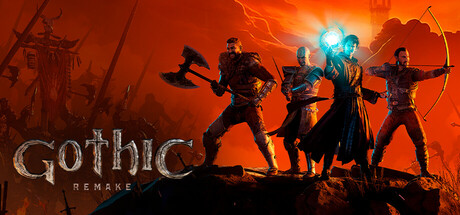
The Gothic Remake is not trying to be a modern RPG that holds your hand. Developer Alkimia Interactive, working under THQ Nordic, is rebuilding the beloved 2001 cult classic from the ground up — and they have made one thing clear from the start: the minimap is not coming back. That single design decision signals something important for RPG fans and the broader gaming industry alike. Immersive design is making a deliberate comeback, and this remake is betting everything on it.
A World Built to Be Explored, Not Tracked on a HUD
The original Gothic earned its cult status by doing something most RPGs refused to do — it trusted the player. No minimap meant you actually had to learn the world. You remembered the location of the old mine by navigating there yourself, not by following a blinking dot. Alkimia Interactive confirmed they kept that philosophy strict in the remake. The team reportedly considered whether to add a minimap at some point during development and landed firmly against it.
That is not a small creative call. In 2026, most AAA open-world games treat the minimap as a non-negotiable feature. Removing it is a statement about what kind of experience the developers want players to have. It forces environmental storytelling to carry more weight, because the environment itself becomes the navigation tool. Rocky paths, landmarks, NPC directions — these are your guides.
Minigames Were on the Table, Immersion Won the Argument
The team explored adding minigames during development. Card games and fishing were both on the list of possibilities — the kind of side activities that populate modern open-world RPGs and keep players engaged between main quest beats. In the end, those ideas did not make the cut. The reasoning connects directly to the same design principle behind the minimap decision: anything that pulled players out of the world’s internal logic was a risk not worth taking.
This is a meaningful choice from a product perspective too. Adding minigames is cheap engagement — it pads playtime and gives content creators things to show in demos. Declining to add them in favor of a tighter, more coherent world is a harder sell in a market driven by feature lists and hour counts. Alkimia Interactive made that harder sell anyway.
It also suggests the studio understands its audience. Gothic fans are not looking for a Witcher-style card game or a fishing system borrowed from a farming sim. They want the colony, the factions, the weight of every conversation and trade. Keeping the feature scope lean protects that experience.
Why This Bet on Immersion Matters Beyond One Game
The Gothic Remake is arriving in a market that has seen immersive-sim and anti-HUD design gain serious traction. Games like Kingdom Come: Deliverance built large audiences specifically by refusing to over-explain the world. Elden Ring proved that players will read environments and learn hostile territory without quest arrows. The commercial success of those titles made the case that demanding design can still sell.
For THQ Nordic, the Gothic Remake is a test of whether a faithful rebuild of a cult RPG can compete in a crowded PC market. The studio’s decision to keep immersion at the center of the design, rather than modernizing it into something safer, is either a bold play or a risky one depending on how you read the audience. Either way, it is a clear editorial stance — and in gaming, those tend to resonate.
If the remake lands well, it adds further data to the argument that players are ready for RPGs that respect their intelligence and reward exploration over efficiency. If it struggles, expect studios to point to the minimap absence as the culprit. The reality, as usual, will be more complicated than either narrative.
The Gothic Remake’s reception at launch will be worth tracking closely. Pay attention to whether reviewers flag the navigation as a frustration or a feature — that split will tell you something real about where the mainstream RPG audience sits on immersion. Watch player retention data if it surfaces, and watch how the game performs with audiences who never played the original versus those who did. For anyone who spent time in the original Gothic’s world, the commitment Alkimia Interactive is showing is exactly what a remake of this game should look like — an invitation to learn a world the way it was always meant to be learned, without a map telling you where to go next.