
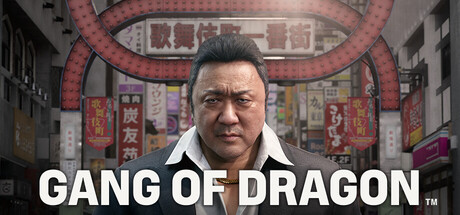
One of the most anticipated projects from a Yakuza legend is all but gone. Gang of Dragon, the debut title from Nagoshi Studio and the first game from former Yakuza creator Toshihiro Nagoshi since he left Sega in 2021, appears to be cancelled. No official announcement has come from the studio or its backer NetEase — but the signs pointing to a full shutdown are impossible to ignore, and the collapse carries real lessons for anyone watching the business side of gaming.
How a Dream Studio Lost Its Funder and Its Future
Nagoshi Studio was built on serious credentials. Toshihiro Nagoshi spent decades at Sega, where he created the Yakuza franchise — one of the most beloved action-RPG series in gaming — before departing in late 2021 alongside series director Daisuke Sato. NetEase, one of China’s largest gaming companies, stepped in as the studio’s financial backbone when Nagoshi Studio was formally established in early 2022 in Tokyo’s Shibuya district.
The studio’s debut project, Gang of Dragon, got its world reveal at The Game Awards in December 2025. The action-adventure title was set in Kabukicho, the nightlife district of Shinjuku, and starred a high-ranking member of a Korean crime syndicate played by Korean-American actor Ma Dong-seok. The spiritual kinship to Yakuza was unmistakable, and anticipation ran high.
Then, just three months later, everything fell apart. NetEase informed studio staff in early March 2026 that it was withdrawing support. The reason cited was a completion gap of roughly 7 billion yen — approximately $44 million — that the funder was unwilling to cover. NetEase reportedly offered the team a path forward: continue the project independently, but absorb the costs of retaining the game’s assets and brand. In practice, that was no offer at all.
A Studio Disappearing One Signal at a Time
What followed was a slow, uncommunicated unraveling. The studio’s YouTube channel — home to its trailers and promotional material — was deleted. The official website went dark. The Tokyo office was updated on Google Maps to read permanently closed. At least seven developers updated their professional profiles to list themselves as former Nagoshi Studio employees. No press release. No statement. No farewell.
The clearest signal came on June 17, 2026, when studio co-founder Daisuke Sato quietly updated his public social media biography to read ex-Nagoshi Studio, Inc. That single line confirmed what weeks of silence had already suggested.
Around the same time, Nagoshi himself appeared in a Famitsu 40th anniversary industry feature — the kind of congratulatory editorial that typically lists every developer’s current affiliation. Nagoshi was the only creator in that issue listed with no studio or company identity attached to his name. In a world where professional context is everything, that blank space said more than a press release ever could.
Gang of Dragon remains listed on Steam with no formal cancellation notice, but the probability of the game ever reaching players in any recognizable form is effectively zero at this point.
What This Collapse Reveals About Game Studio Economics
The Nagoshi Studio story is a sharp reminder of how precarious even pedigreed game development can be. A creator with a proven franchise, a major corporate backer, and a high-profile reveal at the gaming industry’s biggest stage still could not survive a cost overrun mid-production.
NetEase has been quietly pulling back from several international gaming investments over the past few years, and this closure fits a broader pattern of the company reassessing its global studio portfolio. For a backer with NetEase’s scale, a $44 million gap is a straightforward business decision. For the developers who relocated their careers to a new studio built around a singular creative vision, it is something else entirely.
The hard business truth is that publisher-backed studios without diversified revenue or IP ownership face a structural vulnerability. When the money stops, everything stops. There is no community-funded fallback, no back catalog to monetize, and no real leverage when the funder controls the assets.
For players who were excited about Gang of Dragon as the next evolution of the Yakuza formula, the loss stings. For anyone watching the gaming industry as a business, this is a textbook case of how fast a studio can go from world premiere to permanent closure — with no announcement required.
For more BizzNerd coverage of the business of gaming, read about Microsoft weighing an Xbox spin-off and GameStop’s rewards program shake-up.